Why Your Next Website Should Be AI-Powered: Real Personalisation, More Customers
Your website works hard, but it could work smarter. Every day, potential customers visit your site and leave without buying, booking, or getting in touch. What if your website could automatically adapt to each visitor, showing them exactly what they need to see, when they need to see it?
That's exactly what AI websites do. They adapt content in real time so more visitors take action—without changing your products, prices, or core business model.
💡If you're wondering about the tech and strategy behind this shift, check out our deep dive into [how AI is redefining web design in Ireland for 2026] before you read on.
What Exactly Is an AI Website?
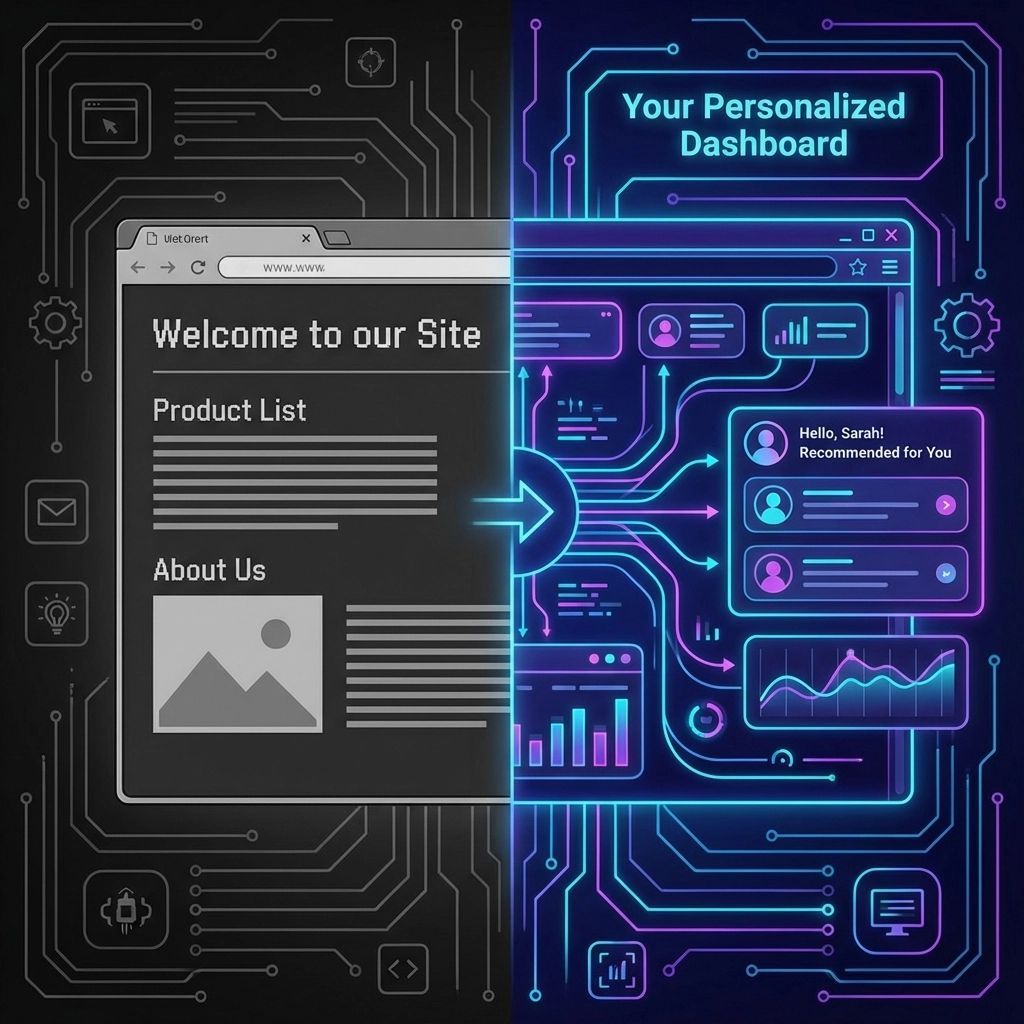
An AI website uses smart rules to personalise content for each visitor automatically. Instead of showing the same homepage to everyone, it adapts based on real-time data about who's visiting and when.
Think of it as having a brilliant salesperson who remembers every customer's preferences, knows exactly what time of day they prefer to shop, and can instantly adjust their approach based on whether someone's browsing on their phone during lunch or relaxing on their laptop at home.
The magic happens through intelligent algorithms that process visitor data in milliseconds. Your website becomes responsive to context, not just clicks.
The Data That Powers Smart Personalisation
AI websites tap into several key data points to create personalised experiences:
Location data tells your website where visitors are browsing from. A Dublin-based accountancy firm can highlight their city centre office hours to local visitors while showing online consultation options to people browsing from Cork or Galway.
Time of day transforms how content appears. Your café's website automatically switches from breakfast specials in the morning to lunch offerings at midday, then dinner options in the evening: all without you lifting a finger.
Seasonal timing keeps your content fresh year-round. Your retail site can shift to cosy winter themes in December or spring promotions come March, matching what customers are actually thinking about.
Device type ensures optimal experiences. Mobile visitors might see prominent click-to-call buttons, while desktop users get detailed contact forms and longer product descriptions.
Visit frequency helps identify returning customers versus first-time browsers. Loyal visitors might see exclusive offers or new product announcements, while newcomers get introductory information and trust-building content.
Real-World Examples That Drive Results
You understand this best through real journeys. Here are three short, hypothetical walk‑throughs you can picture on your own site.
These rules only run when someone opens your website. Your site can greet visitors based on browser location, time, device, and season, but it can’t send pop‑ups to people who haven’t visited.
See it in action: three quick journeys
Restaurant/Café: Breakfast to dinner, automatic
It’s 8:10am in Cork and commuter searches on mobile. Your time‑of‑day rule loads a morning banner, the breakfast menu, and a big “Order ahead” button.
The combo block nudges a “Coffee + porridge” saver. Your device rule keeps the CTA thumb‑friendly.
At 12:35pm a nearby office worker opens your site on desktop. Lunch takes over with today’s special, clear pricing, and prep times for collection.
After 5pm the dinner menu appears with a “Book for 7:15pm” slot pulled from availability. Households see “Kids eat free Wednesdays” based on day and hour.
Takeaway: Use time‑of‑day switching for menus and device‑specific CTAs to speed decisions.
Accountancy: Smart local invite, seasonal focus
It’s 10:05am in Dublin and someone stands 500m from your office. They open your site on mobile and see a pop‑up: “Nearby? Drop in before 12:30 – free 10‑minute consult today.”
They get one‑tap directions, parking, and current wait time. The prompt only shows during opening hours and within 1km.
A visitor from Limerick at 8:30pm gets no walk‑in prompt. Your hours rule swaps to “Book a video consult,” showing early‑morning slots and a simple intake form.
In January, your seasonal rule updates the hero to “Income tax returns due 31 Jan” with a one‑page checklist. In May, it pivots to “PAYE reviews” and “Annual return deadlines.”
Return visitors see the last service they viewed—payroll, VAT, or sole trader setup—with a quick “Upload documents” link.
Takeaway: Combine proximity, opening hours, and seasonal blocks so every visitor sees the most helpful next step.
eCommerce: Change with the season, call on mobile
Early December on desktop, your seasonal rule switches the homepage to gift bundles, a free gift‑wrap badge, and an Irish shipping cut‑off countdown.
On Mother’s Day week, mobile visitors see a pastel theme and a sticky “Call now” button. After the browser shares location, your rule adds “Collect in‑store today” within 10km.
Late August, back‑to‑school takes over automatically. You show “Class lists by county,” local delivery ETAs, and “Next‑day to Dublin, Cork, Galway” where stock allows.
Returning shoppers land on “Pick up where you left off” with last‑viewed items and sizes. After hours, your device and timing rules swap the call button to “Ask on WhatsApp.”
Takeaway: Schedule seasonal themes, layer location for collection and delivery, and show call buttons only on mobile when you can answer.
Small Changes, Big Impact
AI personalisation works best when it feels invisible. You make small, contextual tweaks that guide people to the next step.
To use Spryter Solutions’ AI features, your site needs to be rebuilt on our AI-powered system. Once live, those tweaks run automatically and help more visitors move from browsing to booking, buying, or calling.
When your site matches time, location, and device, people act. It’s the difference between a generic pitch and a timely nudge.
Beyond conversions: better experience
Your site becomes easier to use. People find what they need faster and feel understood.
The experience is helpful, not intrusive. You earn trust while reducing friction.
Perfect for Every Irish Business
AI websites aren't just for tech giants or massive corporations. Irish businesses are seeing remarkable results across every sector:
Restaurants and cafés adjust menus, highlight seasonal specials, and promote different services based on visit timing, location, and device.
Retail businesses showcase relevant products, adjust promotional messaging, and highlight local delivery options automatically.
Professional services present appropriate contact methods, highlight relevant expertise, and adjust availability information based on visitor context.
Tourism operators display season-appropriate activities and personalised itinerary suggestions.
B2B companies show different case studies, adjust technical detail levels, and present appropriate contact options based on visitor behaviour patterns.
The technology works equally well for a family-run bakery in Kilkenny and a growing consultancy firm in Dublin's city centre.

Getting Started Is Simpler Than You Think
With our AI websites, we rebuild your site on our AI-powered system. You keep your brand, content, and goals, but the engine underneath is upgraded.
You don't need technical expertise. We handle the build, setup, and ongoing optimisation, and the system learns from visitor behaviour to keep improving.
The Competitive Reality for Irish Businesses
Your competitors may already be implementing AI personalisation. Businesses that create more relevant, timely experiences naturally capture more customers from those still offering generic, static websites.
The question isn't whether AI websites work: the data proves they do. The question is whether you can afford to wait while competitors provide the personalised experiences customers increasingly expect.
In a market where customers have countless options, the businesses that adapt to individual preferences will consistently outperform those that don't. AI websites give you that competitive edge automatically, 24 hours a day, seven days a week.
Your customers want relevant experiences. AI websites deliver them automatically. The only question left is: when will you start?
Ready to explore how AI personalisation could transform your website's performance? Get in touch to see what's possible for your business.