The 2026 Ireland Local SEO Playbook: Dominating Search Without the Jargon
Local SEO in Ireland isn't about gaming algorithms or chasing trends. It's about making sure the person searching "plumber in Galway" or "accountant near me Dublin" finds your business first.
The landscape has shifted dramatically in 2026. AI now answers search queries directly. Zero-click searches mean customers never visit your website. And Google's local pack has become more competitive than ever.
But here's the good news: small and medium Irish businesses can still outrank national chains by focusing on genuine local relevance and executing the fundamentals consistently.
This playbook gives you the exact framework to dominate local search in your area, whether you're in Cork, Limerick, or a small town in Donegal.
Your Google Business Profile: The Foundation of Everything
Your Google Business Profile (GBP) is your digital shopfront on Google Maps and Search. It's the first thing potential customers see when they search for your services locally.
Most Irish businesses set up their profile once and forget about it. That's a costly mistake.
Complete every single field in your profile. Business name, address, phone number, opening hours, website, services offered, and business description all matter. Google rewards completeness.
Your business category is critical. Choose the most specific category that describes what you actually do. "Restaurant" is too broad if you're a gastropub in Wicklow. "Gastropub" or "Irish Restaurant" is better.
Add high-quality photos of your premises, team, products, and work. Profiles with photos get 42% more requests for directions and 35% more clicks to their websites.
Update your hours for bank holidays and special closures. Nothing frustrates Irish customers more than driving to a business that's unexpectedly closed.
Post updates weekly. Share news, offers, events, or helpful tips. These posts appear in search results and show Google your profile is active and relevant.
💡 Pro Tip: If you've covered the basics but still aren't seeing results, read our troubleshooting guide on 10 Reasons Your Google Business Profile Isn't Getting Leads to find out what might be holding you back.
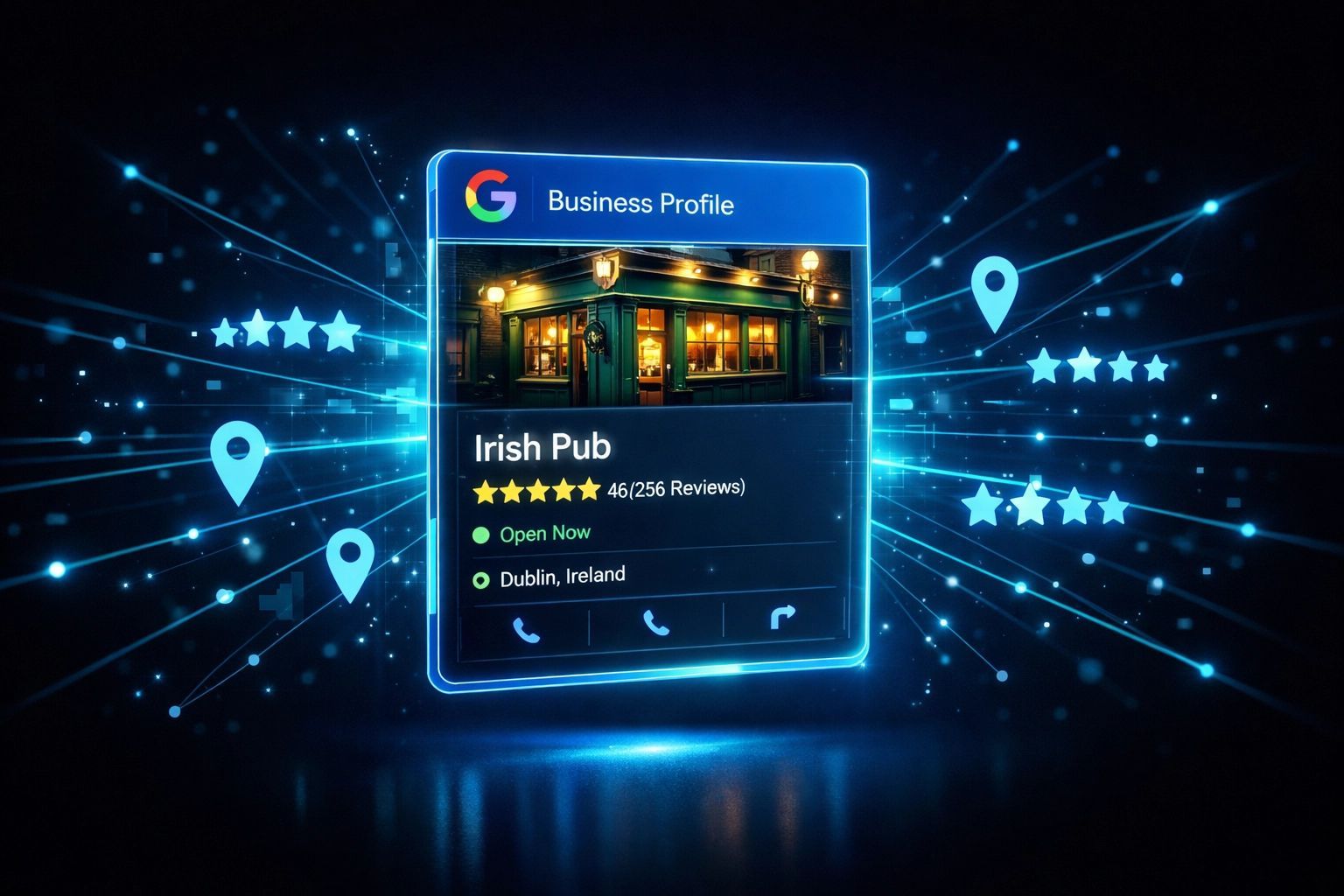
The consistency rule cannot be broken. Your business name, address, and phone number (NAP) must be identical everywhere online. If your GBP says "Main Street" but your website says "Main St," you're confusing Google and damaging your rankings.
Create a standard format for your business information and use it everywhere without exception.
🛡️ Your Google profile is your most valuable local asset—make sure you know how to protect it from common scams.
The Irish Citation Landscape: Where to Be Listed
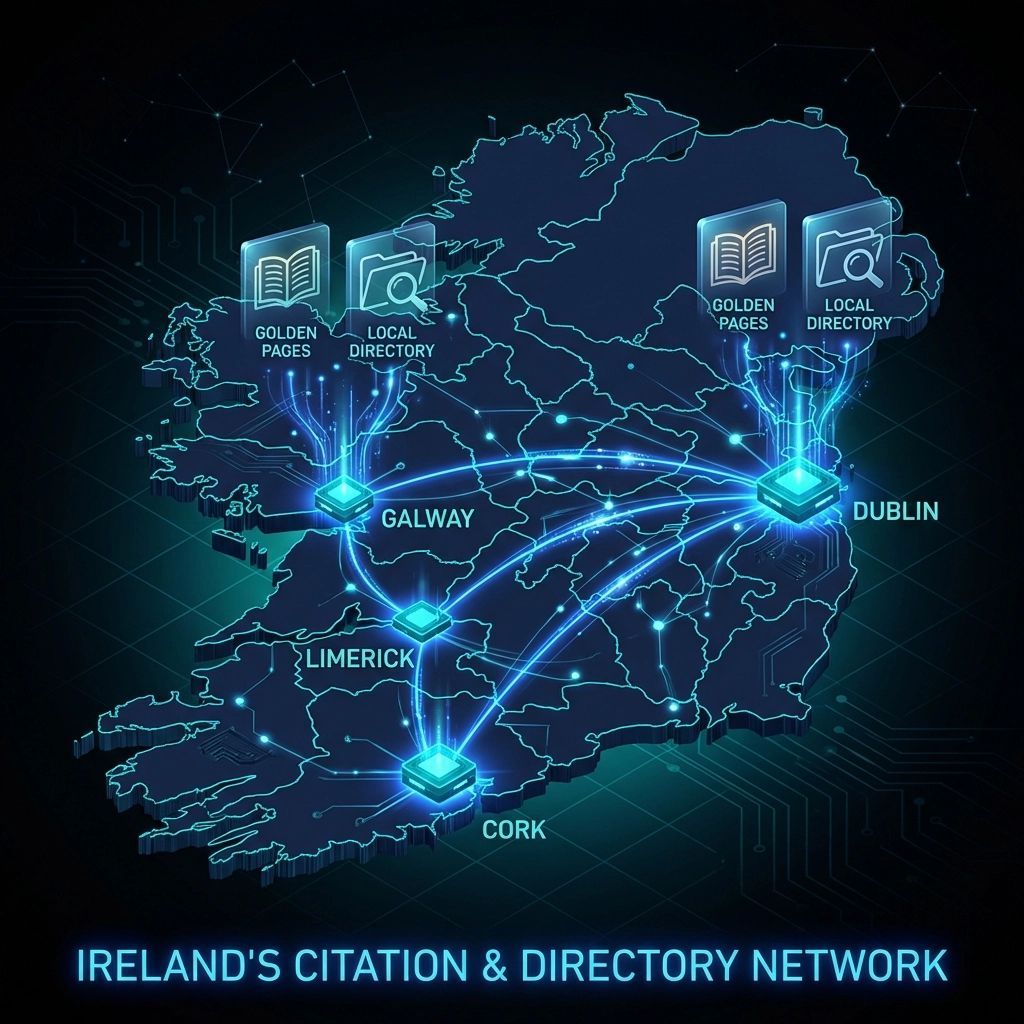
Citations are mentions of your business name, address, and phone number on other websites. They act as trust signals to Google that you're a legitimate local business.
In Ireland, certain directories carry more weight than others.
Golden Pages remains essential despite declining usage. It's been around since 1968 and Google recognizes it as authoritative for Irish businesses.
YourLocal.ie is a dedicated Irish directory that helps businesses connect with customers in their specific county or town.
Yelp.ie has grown significantly in urban areas, especially Dublin and Cork. Service businesses benefit most from a complete Yelp profile.
TripAdvisor is non-negotiable for hospitality businesses. Hotels, restaurants, pubs, and attractions need active, well-managed profiles.
Chambers of Commerce listings add credibility. If you're a member of your local chamber in Waterford, Kilkenny, or anywhere else, make sure you're listed in their online directory.
Industry-specific directories matter too. Plumbers should be on onlinetradesmen.ie, solicitors on Lawsociety.ie, and so on.
The citation audit is simple but tedious. Search for your business name in Google. Check every listing that appears. Ensure your NAP is identical everywhere.
If you find inconsistencies, fix them immediately. Contact the directory or claim your listing to update the information.
Building new citations is straightforward. Create accounts on relevant directories and submit your accurate business information. Prioritize quality directories over quantity.
Hyper-Local Content: Speaking to Your Actual Community
Hyper-local content shows Google you're genuinely embedded in your community, not just a business that happens to have a Sligo or Limerick address.
Most Irish businesses miss this opportunity entirely.
Create location-specific service pages if you serve multiple areas. Don't just duplicate the same content and swap out town names. Write unique, relevant content for each location.
A roofing company serving both Cork City and Mallow should have separate pages addressing the specific needs of each area. Mention local landmarks, neighbourhoods, and community context.
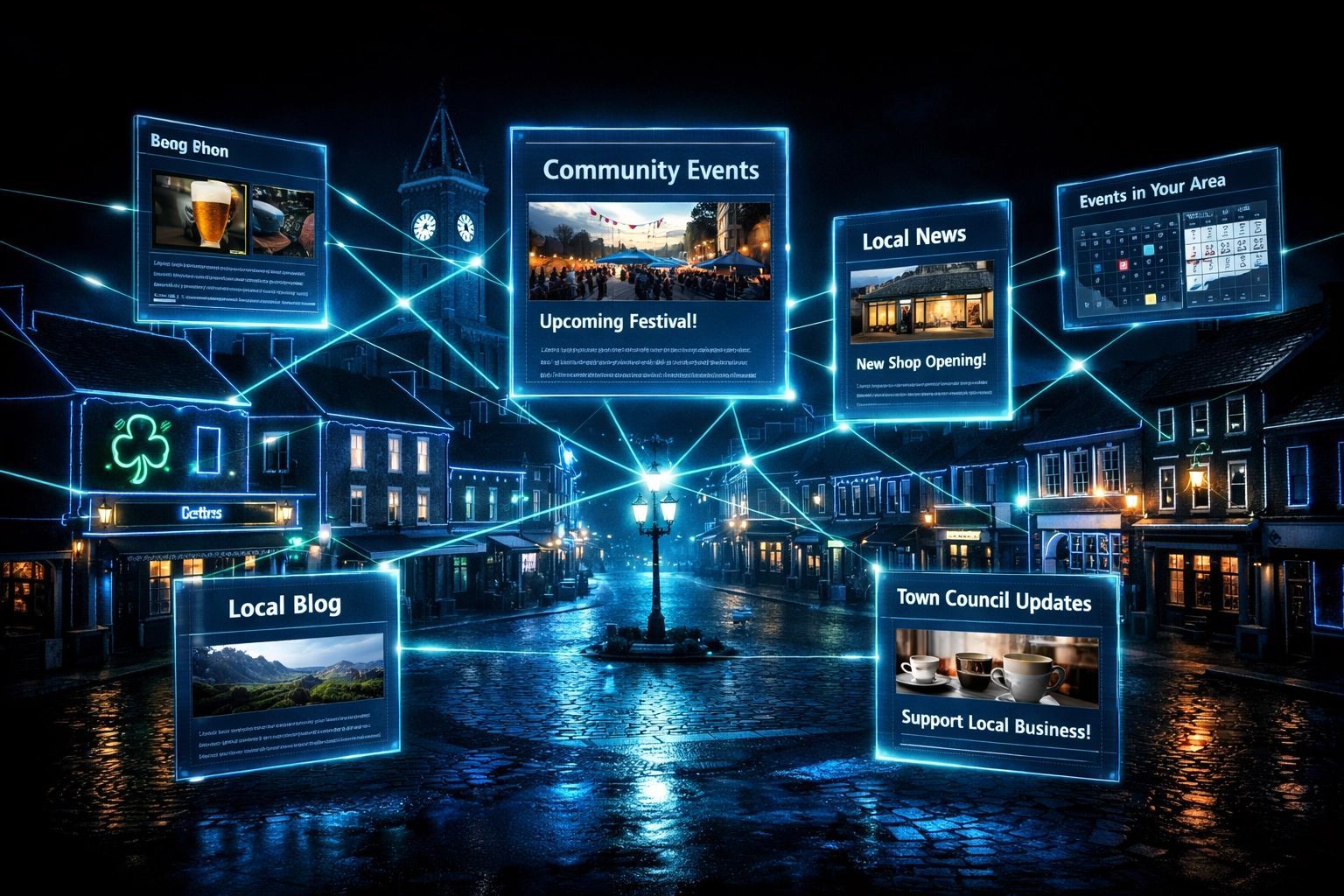
Write about local events and news. A Galway café blogging about the Arts Festival isn't just creating content, it's demonstrating local relevance and expertise.
Feature local customers and projects (with permission). Case studies showing work in Dundalk or Drogheda prove you actually operate there.
Answer location-specific questions. What planning regulations apply in your county? What are common challenges for businesses in your area? What local resources are available?
Partner with local organizations and mention those partnerships on your website. Sponsoring a local GAA club or supporting a community charity builds both offline reputation and online visibility.
Create a "Serving [Your Area]" section on your website. List the specific towns, neighborhoods, and counties you cover with genuine, helpful information about each.
Google's algorithm can detect thin, duplicated content. Put in the effort to make each location page valuable and unique.
The Review Economy: Building Trust That Ranks
Reviews are one of the most powerful ranking factors in local SEO. Volume, recency, and sentiment all influence where you appear in search results.
But more importantly, reviews influence whether customers choose you over competitors.
Irish consumers trust online reviews almost as much as personal recommendations. A business with 50+ positive reviews will consistently outperform one with 5 reviews, even if the latter has a perfect 5-star rating.
Ask for reviews systematically, not sporadically. After a successful project or positive interaction, send a simple follow-up message with a direct link to your Google Business Profile.
Make it easy. The fewer clicks required, the higher your response rate.
Respond to every review, positive or negative. Thank customers for positive feedback. Address negative reviews professionally and offer to resolve issues offline.
Your responses are public. Potential customers read them. A thoughtful response to a negative review can actually increase trust.
Never, under any circumstances, fake reviews or offer incentives for positive reviews. Google's detection systems are sophisticated, and getting caught results in severe penalties or complete removal from search results.
Diversify your review platforms. While Google reviews matter most for local SEO, reviews on Facebook, TripAdvisor, or industry-specific platforms build broader credibility.
Monitor reviews weekly. Set up Google alerts for your business name to catch mentions and reviews across the web.
The businesses winning the review game in Ireland aren't doing anything complicated. They're consistently delivering good service and consistently asking satisfied customers to share their experience.
Local Keywords: How Irish Customers Actually Search
Keyword research for local SEO differs from broader SEO. You're targeting commercial intent in specific geographic areas.
"Digital marketing" is too broad. "Digital marketing agency Dublin 2" is specific, commercial, and local.
Start with Google autocomplete. Type your service into Google followed by "in" and see what Google suggests. These are real searches from real people.
"Electrician in..." will show you the most common location-based searches in your area.
Check "People Also Ask" sections in search results. These questions represent real customer concerns and search queries.
Use Google Search Console to see what searches already bring people to your site. You'll often discover location-based keywords you weren't targeting.
Focus on commercial intent keywords, searches that indicate readiness to buy or hire. "Best accountant Cork" has higher commercial intent than "what does an accountant do."
Create a keyword map that pairs your services with locations you serve. If you're a solicitor in Limerick serving clients across Munster, target keywords like:
- "Solicitor Limerick"
- "Family law solicitor Limerick"
- "Commercial solicitor Munster"
- "Property solicitor Clare"
Build these naturally into your page titles, headings, and content. Page title format: "Service + Location | Business Name" performs well.
Avoid keyword stuffing. Google's algorithm easily detects unnatural keyword usage and penalizes it.
AI-Driven Local Search in 2026: The New Reality
The biggest shift in 2026 local search is AI-generated responses appearing above traditional search results.
When someone searches "best Italian restaurant in Dublin," Google's AI might provide a direct answer with a short list of recommendations, without the searcher clicking any website.
This is a zero-click search, and they're becoming the norm.
For Irish businesses, this changes everything. You're no longer competing for clicks. You're competing to be included in AI-generated recommendations.
How AI decides which businesses to recommend:
Review quality and quantity matter more than ever. AI summarizes review content to assess genuine customer satisfaction.
Structured data helps AI understand your business. Use schema markup to explicitly tell Google what you offer, where you operate, and who you serve.
Complete, accurate business information across all platforms signals reliability. Inconsistent data confuses AI systems.
Engagement signals like how many people call your business, request directions, or visit your website after seeing your profile influence AI rankings.
Fresh content and updates indicate an active, current business. Dormant profiles get deprioritized.
The Irish businesses adapting fastest to AI search focus on building genuine authority rather than gaming algorithms. Create helpful content. Earn quality reviews. Maintain accurate data. The fundamentals matter more, not less.
AI can't fake expertise or local knowledge. If you're genuinely the best roofer in Athlone or the most knowledgeable financial advisor in Wexford, AI will eventually surface that through accumulated trust signals.
💡 Still wondering if SEO is worth it with all this AI around? Read the truth about why SEO still matters for Irish businesses in 2026.
The Irish Local SEO Checklist: Your Monthly Action Plan
Local SEO isn't a one-time project. It's an ongoing process that compounds over time.
Here's your monthly maintenance checklist:
Week 1: Google Business Profile
- Post an update (offer, news, helpful tip)
- Check and respond to new reviews
- Update any changed information (hours, services, photos)
- Check insights to see how customers find you
Week 2: Citations and Directories
- Audit one major directory (Golden Pages, Yelp, etc.)
- Claim any unclaimed listings
- Correct any inconsistent information
- Submit to one new relevant directory
Week 3: Content Creation
- Publish one piece of hyper-local content
- Update one existing location page
- Share local news or community involvement
- Engage with local social media
Week 4: Reviews and Engagement
- Send review requests to recent customers
- Respond to any reviews received this month
- Check competitor reviews for insights
- Document what's working and what's not

Measuring What Actually Matters
Track results that impact your business, not vanity metrics.
Google Business Profile Insights show:
- How many people found your profile through search vs. maps
- Which search queries triggered your profile
- How many people called, visited your website, or requested directions
- Customer actions over time
Compare month-over-month trends. Seasonal businesses should compare year-over-year.
Call tracking reveals which marketing channels drive phone inquiries. If local SEO increases calls by 20%, you know it's working.
Form submissions from location-specific landing pages indicate effective targeting.
Review velocity, how quickly you accumulate new reviews, correlates with ranking improvements and customer trust.
Local pack appearances matter most. Use rank tracking tools to monitor where you appear for your most important local keywords.
Set specific, measurable goals. "Get 10 new Google reviews this month." "Appear in the local pack for 'plumber Galway' by end of quarter." "Increase direction requests by 15%."
Review your metrics monthly. If something isn't working, adjust your approach. If something works well, do more of it.
The Competitive Advantage of Being Local
National chains have bigger budgets, larger teams, and more resources. But they can't compete with genuine local expertise and community integration.
An independent bookshop in Ennis that regularly posts about local authors, hosts community events, and genuinely serves the Clare community will outrank a national chain that treats Ennis as just another location.
Hyperlocal relevance beats generic scale in local search.
Your competitive advantages:
Genuine local knowledge. You understand local customer needs, preferences, and concerns better than any national business.
Community relationships. You know local business owners, organizations, and influencers. Those relationships build citations, backlinks, and trust signals.
Flexibility and responsiveness. You can update your profile, respond to reviews, and adjust your approach faster than corporate competitors navigating bureaucracy.
Authentic storytelling. You have real stories about serving local customers, solving local problems, and being part of the community.
Use these advantages deliberately in your local SEO strategy.
Common Irish Local SEO Mistakes to Avoid
Inconsistent NAP information. This single issue causes more ranking problems than anything else. Create a standard format and use it everywhere without variation.
Ignoring negative reviews. Leaving negative reviews unanswered signals you don't care about customer feedback. Always respond professionally.
Duplicate content across location pages. Google recognizes this instantly and devalues the pages. Write unique content for each location.
Choosing the wrong business category. Your primary category dramatically affects which searches trigger your profile. Choose carefully and specifically.
Neglecting your profile after setup. Local SEO requires ongoing attention. Set up a monthly maintenance routine and stick to it.
Focusing only on Dublin. Yes, Dublin is competitive, but opportunities exist everywhere in Ireland. Businesses in Cork, Galway, Limerick, and smaller towns often face less competition.
Buying fake reviews. Google catches this. The penalties are severe. Build reviews organically, even if it takes longer.
Future-Proofing Your Local SEO Strategy
The fundamentals of local SEO remain constant: relevance, prominence, and distance. But how Google measures these factors evolves constantly.
Build genuine authority through quality content, real relationships, and exceptional service. This never goes out of style.
Maintain data accuracy everywhere online. As AI systems grow more sophisticated, they'll increasingly reward consistency and penalize inaccuracy.
Focus on customer experience above all else. The businesses that genuinely serve their local communities well will continue ranking well, regardless of algorithm changes.
Stay informed about local search trends. Subscribe to reputable SEO newsletters. Monitor changes in how your customers find you.
Adapt incrementally rather than chasing every trend. Implement changes systematically and measure their impact before moving to the next tactic.
The Irish businesses dominating local search in 2026 aren't doing anything revolutionary. They're executing the basics consistently and building genuine local authority over time.
Start with your Google Business Profile. Get it complete and accurate. Post weekly. Earn reviews. Create location-specific content. Track your results.
That's the playbook. The rest is consistent execution.